2026

MimicX: Policy-in-the-Loop Supervision Refinement for Video-Driven Humanoid Motion Tracking

Shuaijun Liu, Chenglong Zhang, Xuhao Liu, Feiyang You, Yifan Liao, Shuyang Hao, Chaozhe Zhang, Chengyu Wu, Zhen Sun, Ningxin Su#

arXiv preprint 2026

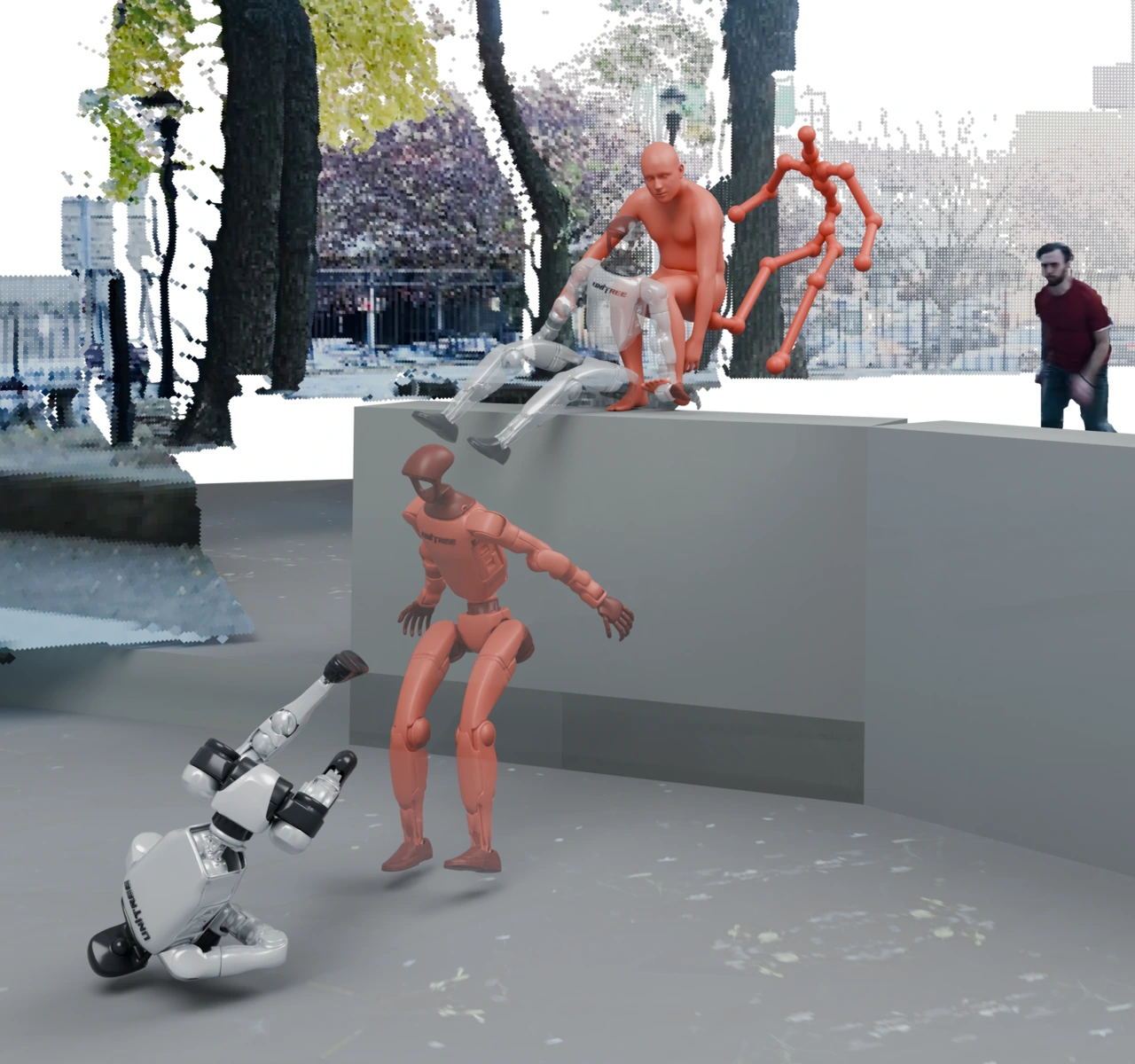
Uses policy execution feedback to refine supervision for video-driven humanoid motion tracking. MimicX identifies difficult transitions and affected body regions, adapts tracking objectives and reset curricula, and verifies refinements through repeated rollouts. Across four core video tasks, it reduces body-tracking error by 25.7% and increases robust execution horizon by 255.6% over fixed-reference training.
Beyond Appearance Shifts: Task-Semantic Action Calibration for VLA Models

Shuaijun Liu, Feiyang You, Chengyu Wu, Shuyang Hao, Chenglong Zhang, Jingyao Cai, Xingwei Chen, Ningxin Su#

Conference on Neural Information Processing Systems NeurIPS 2026

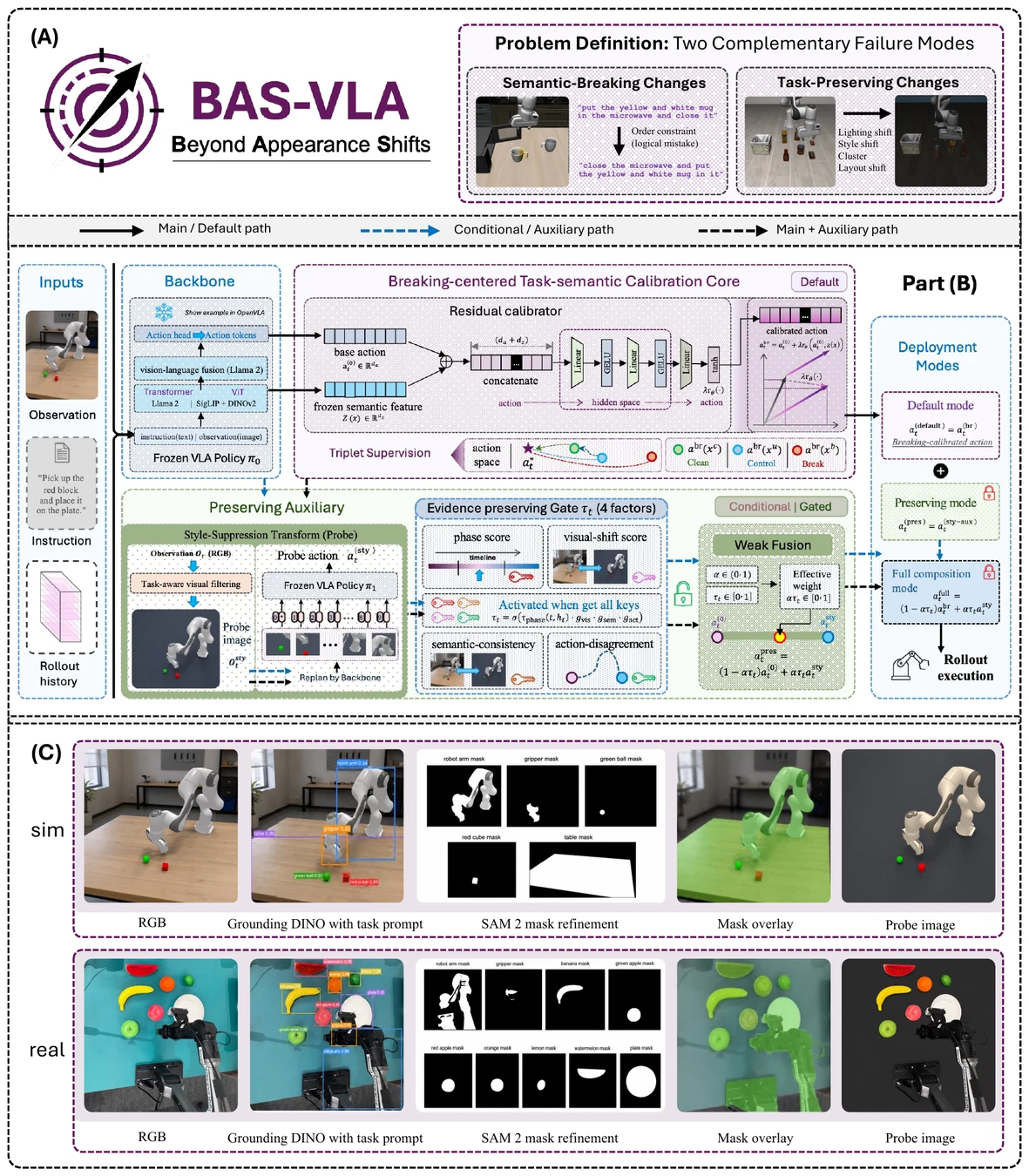
Calibrates a frozen vision-language-action policy to distinguish changes in scene appearance from changes in task meaning. A semantic calibration core adjusts behavior when the target object or task constraints change, while an evidence-gated auxiliary preserves behavior under irrelevant visual variation. This addresses both unnecessary action drift and continued execution of an outdated task. On the LIBERO-Object Milk-Swap benchmark, BAS-VLA maintains 98.0% clean and 97.5% semantics-preserving success while suppressing the original task after target swaps. Under validated style shifts, it raises success from 42% to 70% without reducing clean performance.

HeteroTac-Lift: Empirical Lift Admission via Heterogeneous Bilateral Tactile Servoing and Risk-Budgeted Compliance

Xingwei Chen, Shuaijun Liu, Feiyang You, Ningxin Su

IEEE/RSJ International Conference on Intelligent Robots and Systems IROS 2026

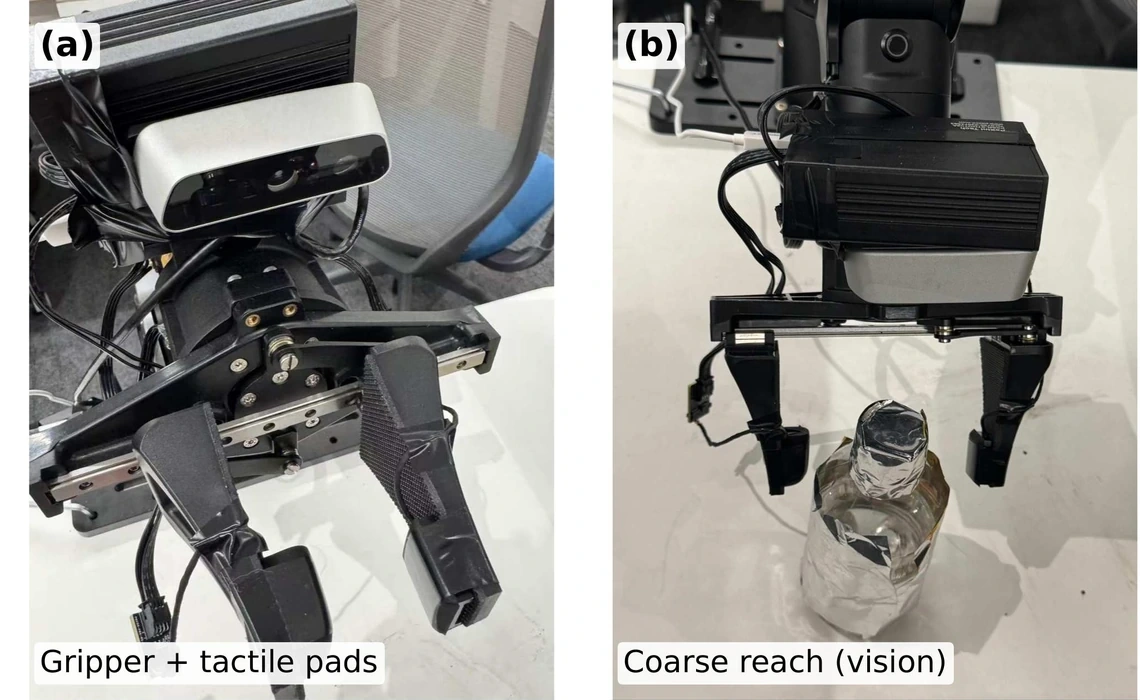
Uses heterogeneous tactile sensors on both gripper jaws to decide when a grasp is ready to lift. Tactile servoing refines contact, risk-budgeted compliance regulates grip force, and a brief micro-lift verifies stability before full lifting. This improves grasping of visually challenging, fragile, and deformable objects while reducing unsafe lift admissions.

D-JEPA: A Decision-Aligned Latent World Model

Shuaijun Liu, Chengyu Wu, Qifu Wen, Feiyang You, Chenglong Zhang, Shuyang Hao, Xi Lin, Ningxin Su#

arXiv preprint 2026

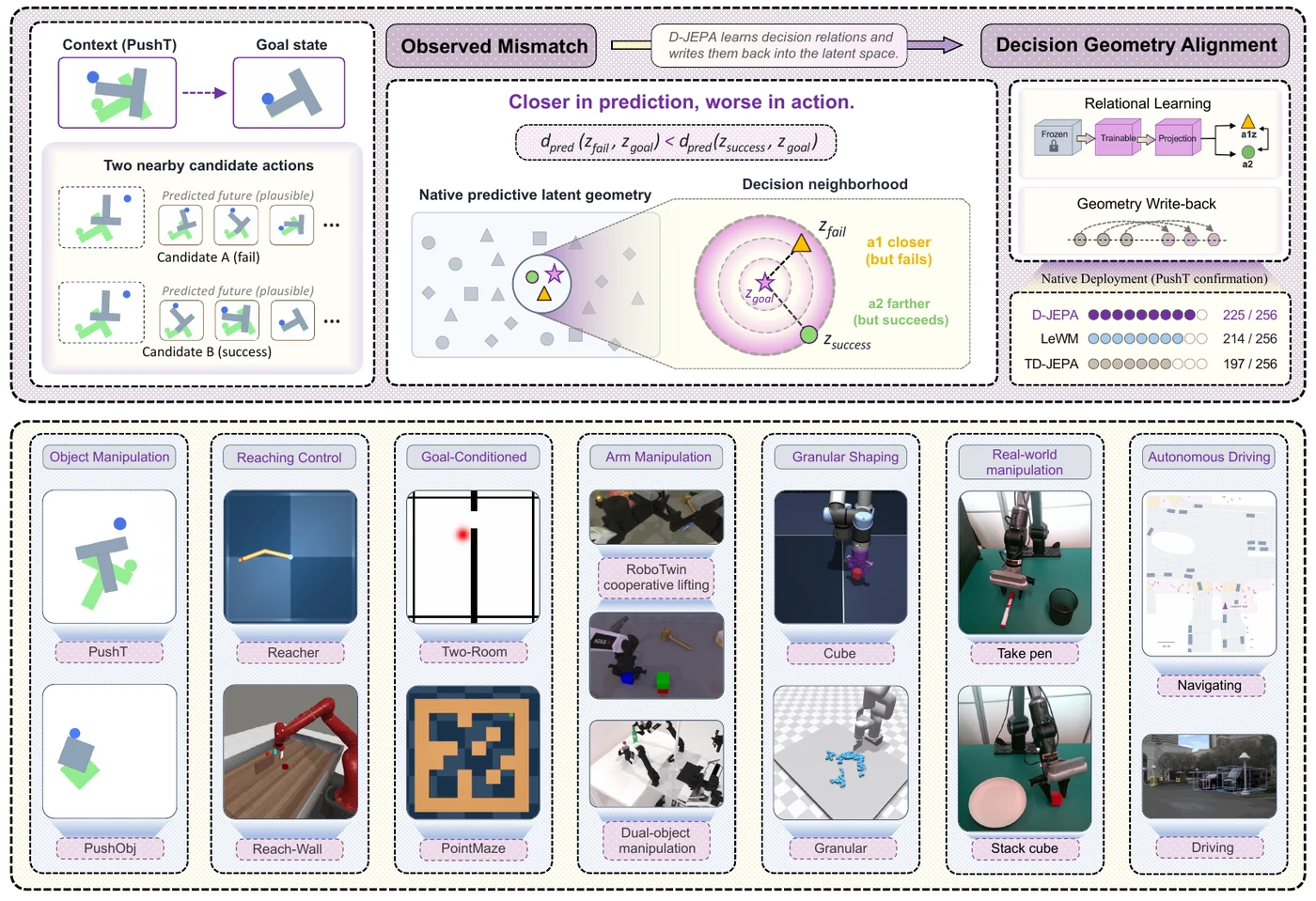
Aligns latent world-model predictions with executed action outcomes. D-JEPA learns decision-relevant relations among candidate futures and realizes them in representations compatible with native latent-distance planning. Evaluations across control, manipulation, physical robots, and autonomous driving show improved action selection.

How Wrong Can a Good Predictor Be? Diverging Updates with Vanishing Predictive KL

Qifu Wen*, Shuaijun Liu*, Zihan Zhou, Xi Zeng, Ningxin Su (* equal contribution)

arXiv preprint 2026

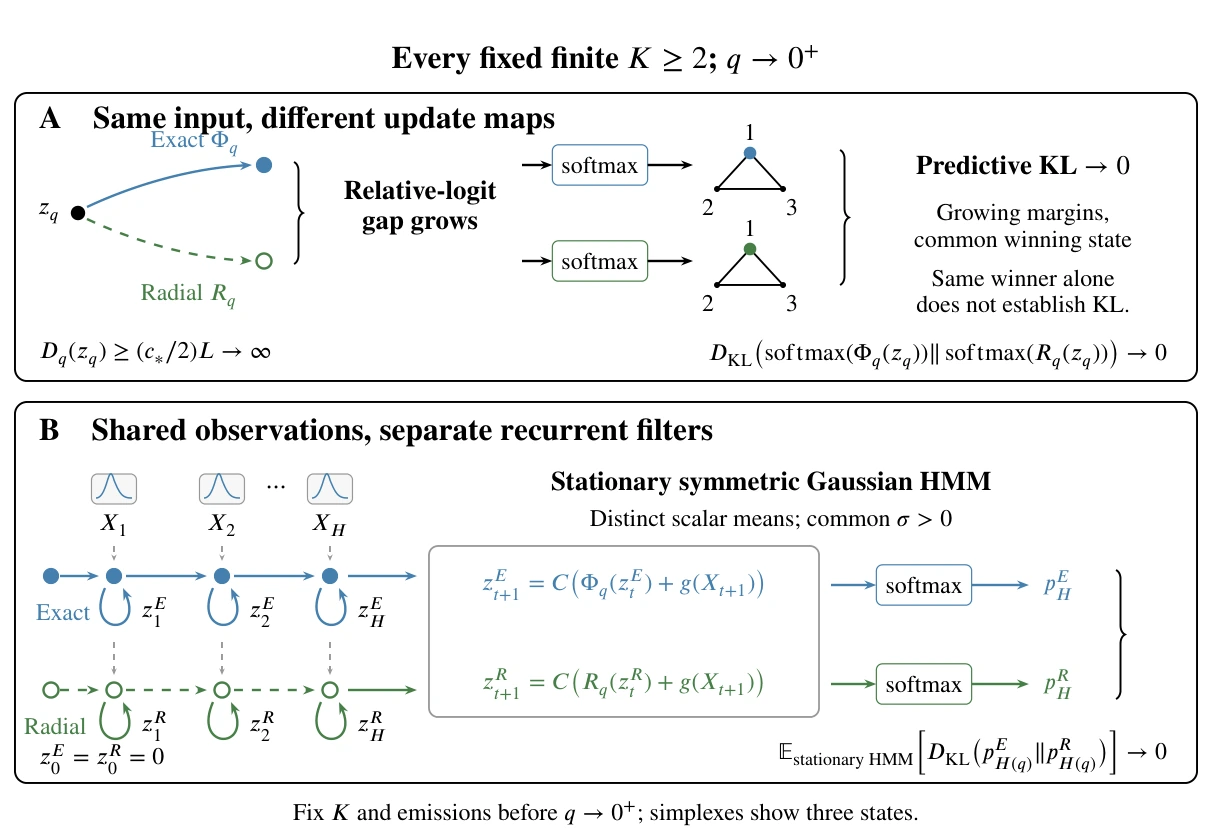
Proves that unbounded differences between internal update maps can coexist with vanishing predictive KL in Gaussian hidden Markov models, separating internal dynamics from predictive performance.

CoWAM: Coordination Contracts for Selective Policy Intervention with WAMs

Shuaijun Liu, Qifu Wen, Shuyang Hao, Qi Luo, Chenglong Zhang, Feiyang You, Chengyu Wu, Ningxin Su#

arXiv preprint 2026

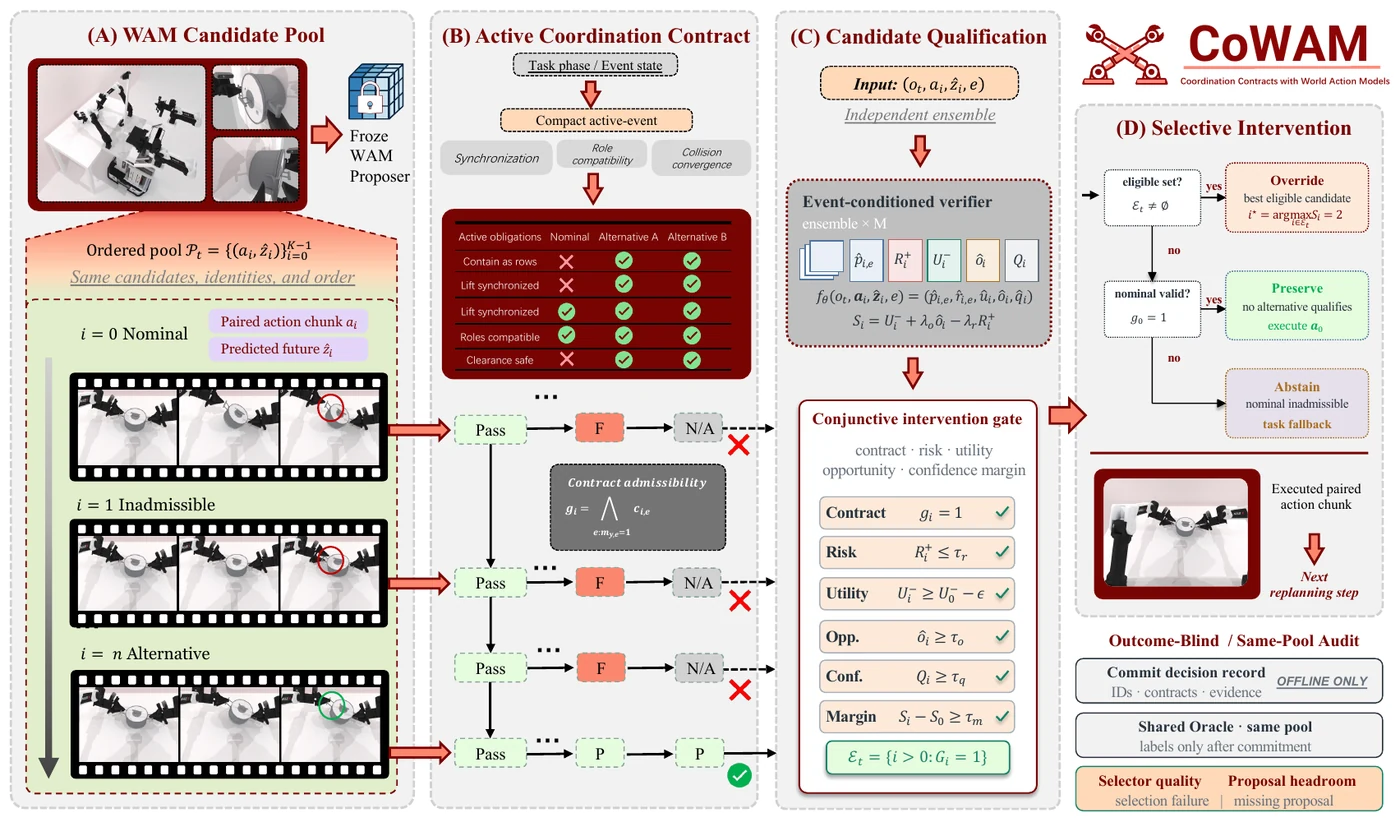
Uses coordination contracts to decide when predicted futures justify a selective intervention in bimanual robot policies. Checks synchronization, role compatibility, and collision risk, retaining the nominal action unless an alternative meets all active constraints and offers a clear, low-risk improvement.

From Triggers to Emotions: A CPM-Grounded Appraisal Multi-Agent for Dynamic Emotional Evolution in Persona-Based Dialogue

Jingyao Cai, Shuaijun Liu, Abdul Rehman, Yutong Guo, Qin Tian, Thomas Dolby, Sue Green, Chantel Cox, Xiaosong Yang

arXiv preprint 2026

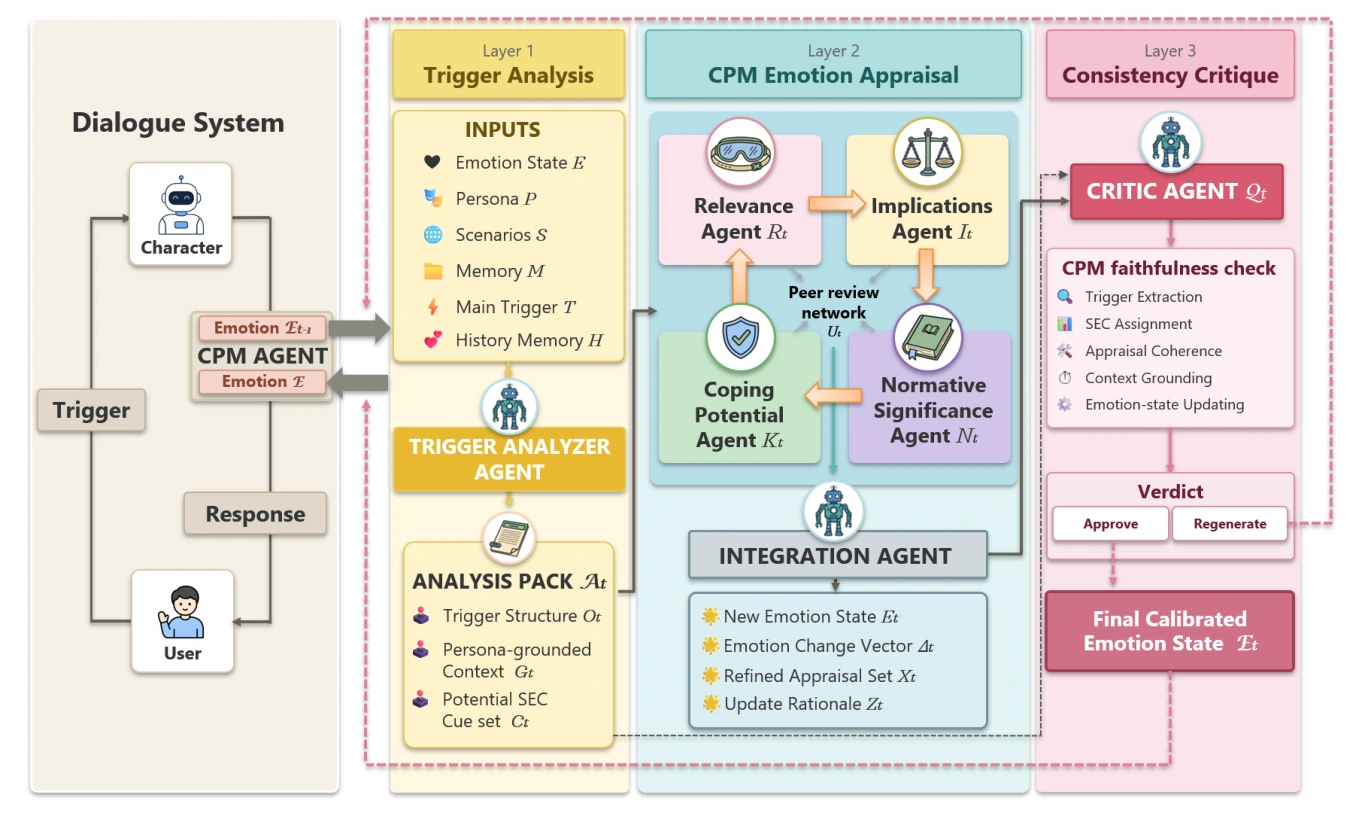
Models evolving persona emotions through dialogue-trigger extraction, collaborative appraisal grounded in the Component Process Model, and continuous emotional-state updates.

When Replanning Becomes the Bottleneck: Budgeted Replanning for Embodied Agents

Shuaijun Liu, Feiyang You, Xingwei Chen, Ningxin Su#

International Conference on Machine Learning ICML 2026

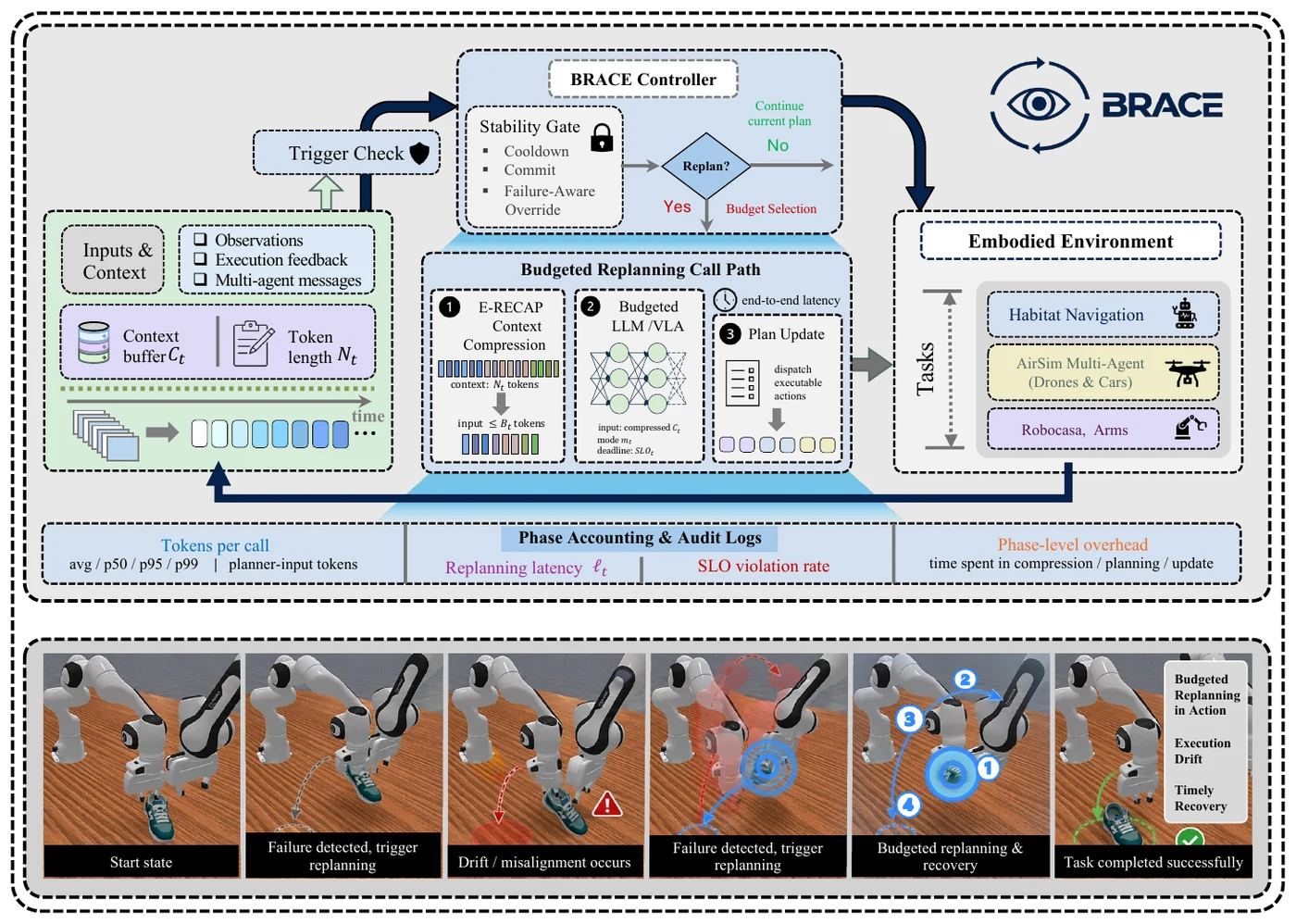
Studies replanning overhead in long-horizon embodied agents and introduces a budgeted replanning framework with adaptive replanning decisions, token budgets, latency SLOs, and context compression.

2025

GradES: Significantly Faster Training in Transformers with Gradient-Based Early Stopping

Qifu Wen, Xi Zeng, Zihan Zhou, Shuaijun Liu, Mehdi Hosseinzadeh, Ningxin Su, Reza Rawassizadeh

arXiv preprint 2025

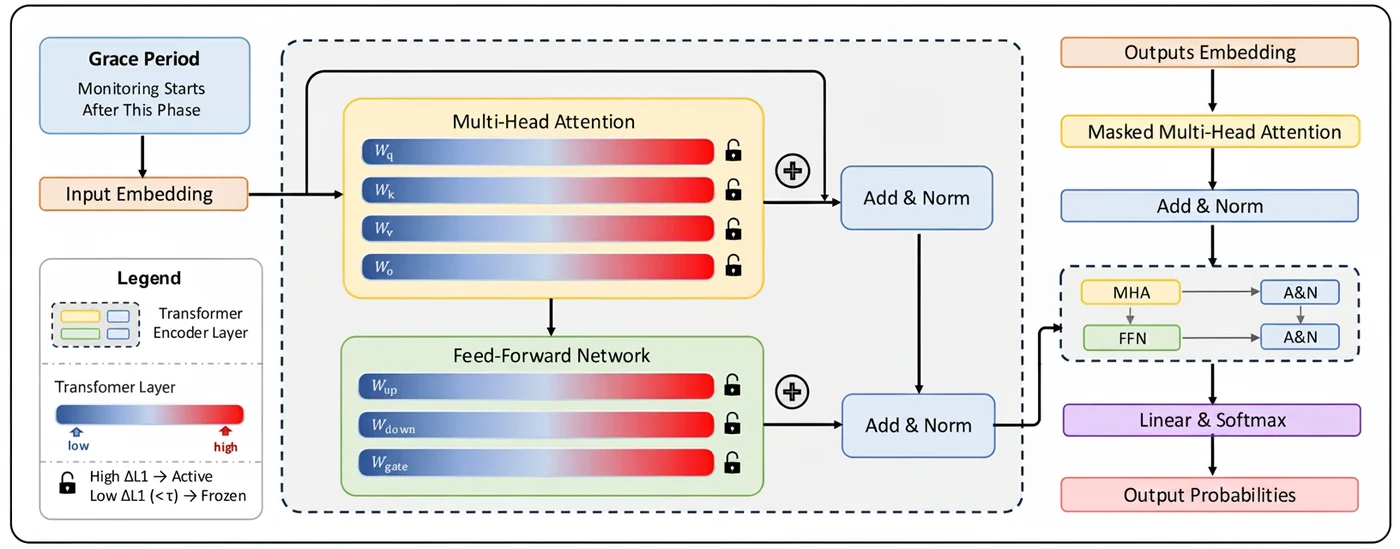
Speeds up fine-tuning by freezing converged transformer matrices.

Energy-Aware Holistic Optimization in UAV-Assisted Fog Computing: Attitude, Trajectory, Task Assignment

Shuaijun Liu, Jinqiu Du, Yaxin Zheng, Jiaying Yin, Yuhui Deng, Jingjin Wu#

Computer Networks, 277, 112064 2026

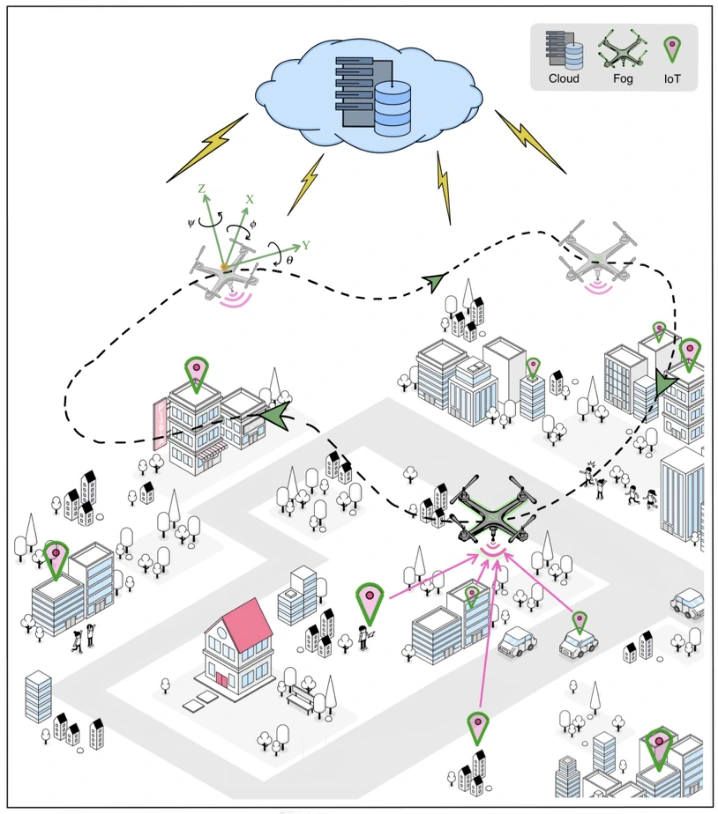
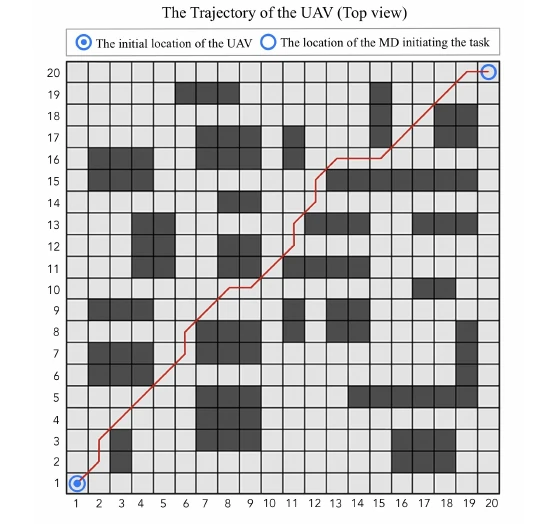
Jointly optimizes attitude control, 3D trajectory planning, resource allocation, and task assignment in UAV-assisted fog computing. The framework couples a fuzzy-enhanced adaptive PID controller with an improved ant colony trajectory planner and particle swarm task assignment. It accounts for varying terrain and dynamically generated tasks, while allowing decisions in one module to inform the others. This connects the UAV's physical flight behavior with communication and computation decisions across the network. Simulation studies evaluate the resulting trade-offs between latency and energy consumption and show improvements over benchmark methods. Joint decisions capture how flight, communication, and computation costs affect the overall system.

2024

Meteorological and Topographical Big Data-Driven UAV Trajectory Planning

Shuaijun Liu, Jiaying Yin, Jinqiu Du, Yaxin Zheng, Yuhui Deng, Jingjin Wu#

International Telecommunication Networks and Applications Conference (ITNAC) 2024

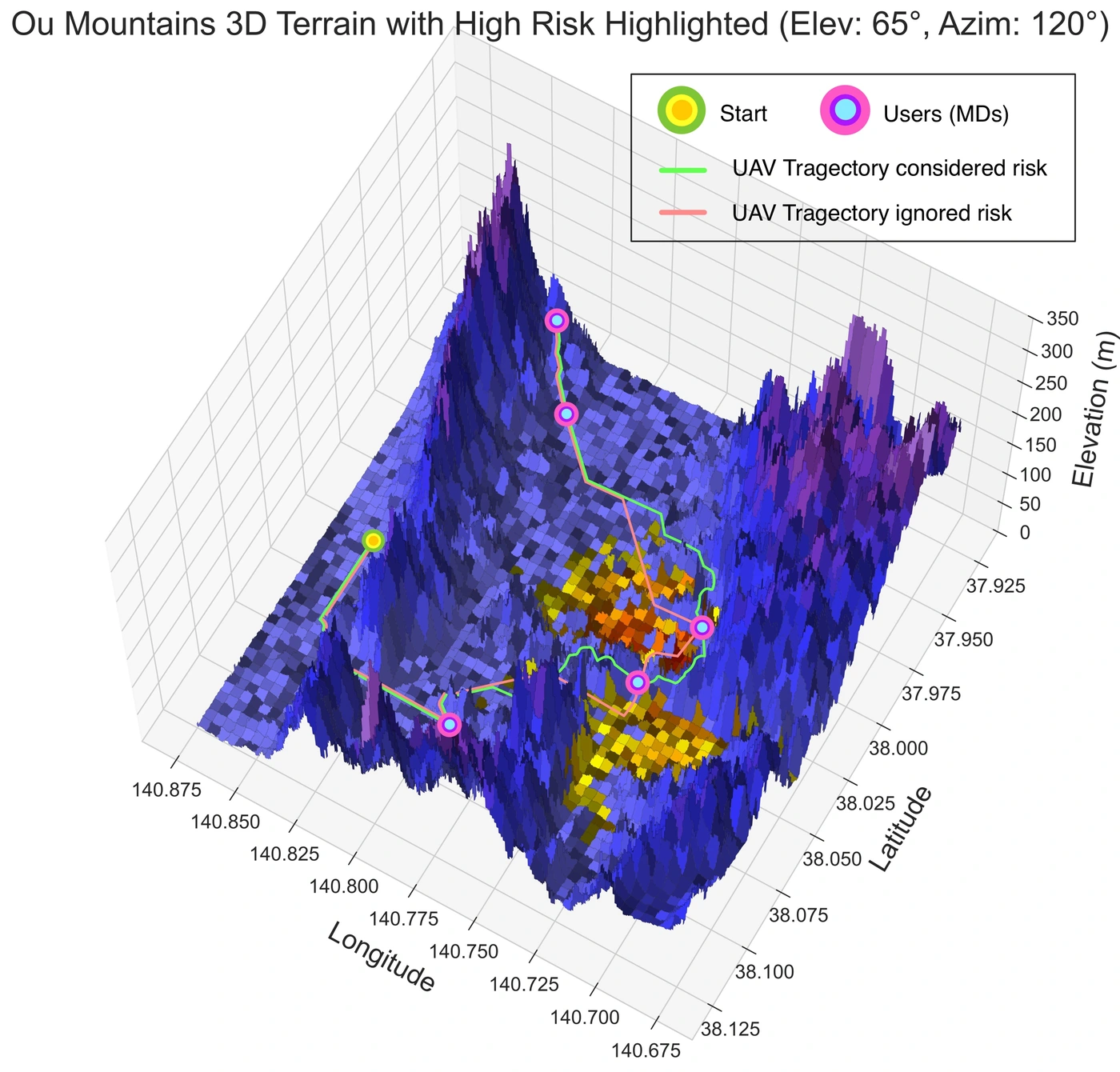
Uses meteorological and topographical data to assess UAV flight risk and adjust trajectories for safer and more efficient deployment.

2022

Optimal Trajectory Planning and Task Assignment for UAV-assisted Fog Computing

Shuaijun Liu, Jiaying Yin, Zishu Zeng, Jingjin Wu#

IEEE 24th International Conference on High Performance Computing and Communications (HPCC) 2022

Coordinates UAV trajectory planning and task assignment to improve energy efficiency in fog computing. The UAV serves as both a communication relay and a mobile computing node, with tasks distributed among available devices. Ant colony and particle swarm optimization support route and assignment decisions, while continuous convex approximation addresses the optimization problem. The planner explicitly accounts for buildings and other obstacles instead of assuming straight-line flight. Simulation experiments demonstrate improved energy efficiency over benchmark algorithms.